Followers

Search This Blog

Showing posts with label Tech. Show all posts

Wednesday, June 17, 2020

GE will make taller wind turbines using 3D-printing


Turbines with a 3D-printed base could be taller than the Seattle Space Needle


GE announced today that it’s developing skyscraper-sized wind turbines with massive 3D-printed bases. The conglomerate plans to work with partners in the construction industry to produce both a printer and materials that could eventually be deployed around the world.

Spearville Wind Farm Turbines

Taller turbines can capitalize on stronger winds at higher altitudes, and the structures support larger blades that generate more power. But building bigger turbines makes transporting the pieces needed to put it together a logistical nightmare. GE hopes to 3D print the base of a turbine wherever they want to place it, so that they won’t need to haul around such a gigantic hunk of concrete or steel. The company says its onshore turbines could reach up to 200 meters tall, which is taller than the Seattle Space Needle and more than double the average height for wind turbines in the US today. 

Onshore wind turbines have had a massive growth spurt since the 1980s, when they averaged a height of about 20 meters in the US — not counting the blades. Under ideal conditions, those earlier turbines had a maximum output of about 100kW per turbine. By 2017, those numbers grew to 84 meters tall with an output of more than 2MW (2000kW). Turbines in parts of Europe, where there aren’t as strong winds closer to the ground, can reach greater heights. One of the tallest onshore turbines, in Gaildorf, Germany, towers 178 meters tall. GE wants to go even bigger. 

Since it’s one of the world’s largest manufacturers of wind turbines, GE could usher in a whole new era for wind turbines design and construction. But it won’t be the first company to look into 3D-printing for wind energy. Startup RCAM Technologies, with $1.25 million in funding from the California Energy Commission, set out in 2017 to build two turbine towers in a similar fashion — their research is still ongoing. That means GE could be the first to make wind turbines with a 3D-printed base commercially available. The company completed its first prototype in October 2019, and it plans to begin production in 2023.
Monday, June 15, 2020

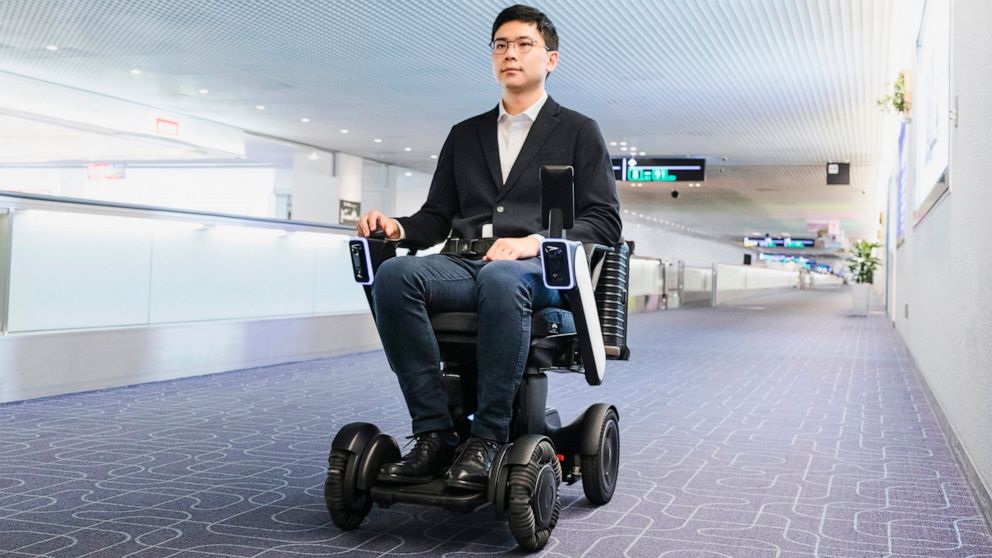
Personal mobility machine needs no help at Tokyo airport


An autonomous mobility system that works like a wheelchair without anyone pushing it is scuttling around a Tokyo airport to help with social distancing amid the coronavirus pandemic


The personal mobility machine seats one person and runs on its own without crashing, even when people jump out unexpectedly, for about 600 meters (660 yards) on a pre-programmed route at Haneda International Airport, WHILL, the company behind the technology, said Monday.


WHILL Chief Executive Satoshi Sugie said robotics and autonomous driving technology that reduce the need for human labor are a good match for these times of “living with" the coronavirus.

“We are rapidly developing our business in order to help restore a world where people can enjoy moving around with peace of mind,” he told The Associated Press.

The ride lasts just several minutes, traveling from security clearance to the boarding gate at a maximum speed of 3.5 kilometers (2 miles) per hour. But hopes are high that the technology, which uses sensors and cameras, can help in other places, such as hospitals, parks and shopping centers. Labor shortages are a problem in Japan, as well as other nations.

Tests have been carried out at various airports since last year, including John F. Kennedy International Airport in New York, and the company hopes to introduce it at airports around the world.

The person on the machine can start or stop it through a tablet controller. It runs on lithium-ion batteries and returns automatically to where it started.

Anyone needing help walking long distances can use it at Terminal One at Haneda, for what’s referred to as that “last-mile mobility,” according to WHILL, based in Yokohama, Japan.

Although vacuum cleaners, machines carrying things and talking robots are already moving about at airports and other places, personal mobility that runs autonomously is still relatively rare in public places.

Sunday, June 14, 2020

Wear a T-shirt based on your mood


India's 1'st touch enable T-shirt


India is fastest growing technology hub,Hyderabad.A Hyderabad citizen have designed a T-shirt where u can change the message on T-shirt as you Wish.It is India's 1'st touch enable T-shirt Known as Broadcast Wear.It was developed by Ayyappa Nagubandi who left his Job from USA and returned to India With Good Plan to develop Something new in fashion industry that Indian's can show in emotions without any hesitation.

Broadcast Wear gets your T-shirt talkingVoice&Data
    
So he created a technology where the thin LED panel which is sandwich between two layers of the cloth and that is connected to Bluetooth and Battery.An Amazing thing to note here is it is Water Resistant,Wear and Tear Resistant,Shock resistance.It is 100% safe.And there are various T-Shirts produced by them Which are Fitness T-Shirt for Calculating  Calories burned ,Number of Steps climbed etc,...Next comes Cycling Jersey and now T-shirts become Fitness App.It also acts as indicator for Left and Right turn according to the Cyclist. It is Combination of Technology and Comfort.Fact is 90% of technology used is from Hyderabad and India.

Friday, June 12, 2020

Ford and McDonald's are turning coffee waste into car parts


Ford has tapped McDonald's to help it turn coffee parts into car parts.

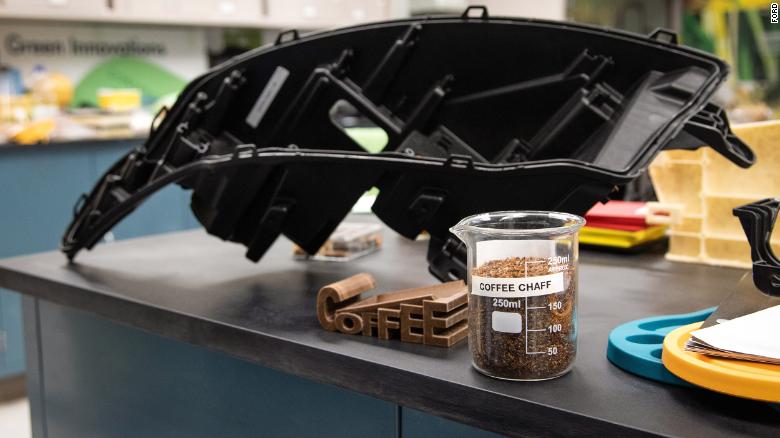
Starting this year, Ford is incorporating coffee chaff — coffee bean skin that comes off during the roasting process — into the plastic headlamp housing used in some cars. It's asked McDonald's, which doesn't roast its own coffee, to connect it with suppliers.


Ford is using coffee chaff to help reduce its environmental impact.


In recent years, as consumers become more concerned about plastic pollution and carbon emissions, companies have made sweeping commitments to reduce their impacts on the environment. They've also been developing innovative, sustainable materials to build consumer products.

Traditionally, Ford uses plastic and talc to make its headlamp housing, explained Debbie Miewelski, senior technical leader of materials sustainability for Ford. The coffee version is more sustainable because it's lighter and doesn't use the talc which, as a mineral, isn't renewable.

Coffee chaff, on the other hand, is widely available, Miewelski said, and much of it goes to waste. Eventually, Ford hopes to incorporate the material into more cars and use it for more parts. 

Ford decided to work with coffee chaff a few years ago. But it's been experimenting with organic materials for over a decade.


The auto company has been using soy-based foam in its cushions since 2011. It also uses waste from wheat, coconut, tomato and other plants in its cars in order to help meet some of its sustainability goals, which include using more renewable materials. 

"If you came to our lab, it looks somewhere between a landfill and a farm," Miewelski said. Her team decided to examine the potential of coffee because the beverage is so ubiquitous.

Once the Ford team figured out how coffee chaff could be used to build car parts, it reached out to McDonald's because of the restaurant chain's scale and its comparable sustainability goals, Miewelski said. Like Ford, McDonald's also wants to incorporate renewable and recycled materials into its products.

The partnership between Ford and McDonald's is an example of how brands with distinct sustainability initiatives can work together. 

McDonald's recently achieved its goal of sourcing all of its US coffee sustainably, one year ahead of schedule, and is also working with competitors to develop more environmentally friendly coffee cups. When Ford approached it about the coffee chaff product a few years ago, the company was able to consider another way to make its coffee greener, said Ian Olson, senior director of global sustainability at McDonald's.

"We've conventionally thought of collaborations as within the food industry," Olson said. The Ford partnership can help McDonald's see "what kind of larger impacts are possible," when it works with a company in another sector.

"This is just scratching the surface of trying to understand what's possible," Olson said.

Wednesday, June 10, 2020

World’s largest digital arts centre opens in Bordeaux submarine base

Once a submarine base'A colossal concrete bunker'for Nazi U-boats in the World War II has been hired for digital arts centre. And this will become 'The World's Largest Digital Arts Center'.


Bordeaux’s WWII submarine base will become the world’s biggest digital art centre


Visitors will be able to view giant digital renderings of works by famous artists set to music and projected on to the walls of the structure. 

And despite the challenges of converting the base, abandoned for nearly 50 years, into a gallery, organisers say it is the perfect space for digital art. 

“The space is magical. It mixes concrete, grandeur, water and reflections,” Augustin de Cointet de Filain, director of the Bassins de Lumières, told AFP. 

“When we visited the space, we knew we had to work with it. We had this epiphany and knew we had to put on exhibitions here.” 

The monumental structure includes four 110m-long pools crossed by walkways and space for 12,000 m² of projections, using 90 video projectors and 100km of optical fibre.


Bordeaux’s WWII submarine base will become the world’s biggest digital art centre


The base was built by the occupying German military in 1943 to house a flotilla of 43 U-Boats, but fell into disuse after the end of the war. 

“It was inaugurated on May 13 and was used for less than two years,” said historian Mathieu Marsan.  
“The space is made of 600,000 cubic metres of reinforced concrete. Destroying it would not have been economically viable.” 

The centre will open with a display of work by Austrian artist Gustav Klimt and German painter Paul Klee. 

“He (Gustav Klimt) is an artist who is well-suited to the vastness of this space, because his early works were these large murals and here we have walls, we have space,” Cointet de Filain. 

“Klimt represented innovation in art, and we thought it was time to show that this submarine base can be innovative too.”

Tuesday, June 9, 2020

India is trying to build the world's biggest facial recognition system


In July, Bhuwan Ribhu received some very good news. 

The child labor activist, who works for Indian NGO Bachpan Bachao Andolan, had launched a pilot program 15 months prior to match a police database containing photos of all of India's missing children with another one comprising shots of all the minors living in the country's child care institutions.

India Planning To Set up World's Biggest Facial Recognition System ...

He had just found out the results. "We were able to match 10,561 missing children with those living in institutions," he told CNN. "They are currently in the process of being reunited with their families." Most of them were victims of trafficking, forced to work in the fields, in garment factories or in brothels, according to Ribhu.

This momentous undertaking was made possible by facial recognition technology provided by New Delhi's police. "There are over 300,000 missing children in India and over 100,000 living in institutions," he explained. "We couldn't possibly have matched them all manually." 

Locating thousands of missing children is just one of the challenges faced by India's overstretched police force in a nation of 1.37 billion people. 

India has just 144 police officers for every 100,000 citizens, compared to 318 per 100,000 citizens in the European Union. In recent years, authorities have turned to facial recognition technology to make up for the shortfall. 

New Delhi's law enforcement agencies adopted the technology in 2018, and it's also being used to police large events and fight crime in a handful of other states, including Andhra Pradesh and Punjab. 

But India's government now has a much more ambitious plan. It wants to construct one of the world's largest facial recognition systems. The project envisions a future in which police from across the country's 29 states and seven union territories would have access to a single, centralized database.

Saturday, June 6, 2020

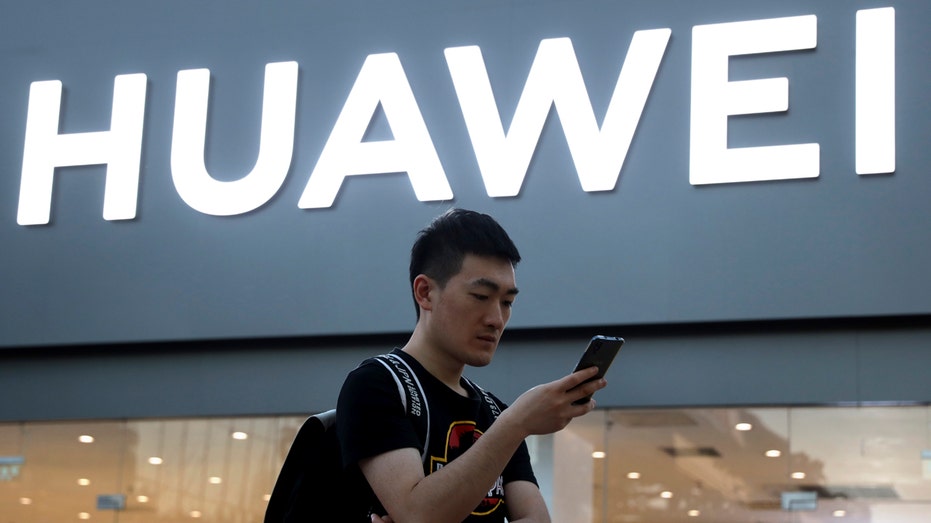
Huawei’s new phone screens coronavirus symptom with temperature sensor


Smartphones just got a little smarter.

In fact, Huawei’s new phone could even help users screen themselves for the coronavirus with a built-in thermometer.

The Honor Play 4 Pro, which was released Wednesday, includes an infrared temperature sensor near the back camera, according to Ars Technica.


Though it isn’t the only sign of COVID-19, a fever is one of the most common symptoms of the virus.

The sensor works when someone touches it to a person or object and taps through the app, Ars Technica reported.

According to Forbes, the sensor measures temperatures between -4 degrees Fahrenheit (20 C) and 212 degrees Fahrenheit (100 C).

But Huawei isn’t the only company offering possible coronavirus screening technology.

One newly released app, ëlarm, connects to users’ wearable devices and monitors for specific coronavirus symptoms and other viruses, the website says.

Ëlarm costs $4.50 per month for the “Early Adopter Plan” and the second month is free for early users, according to the website. 

The app works with wearable devices from Apple, Fitbit, Google Fit, Samsung, Huawei, Withings, Motorola, Fossil and Sony, among others, as long as they can connect to Google Fit, the website says.

Friday, June 5, 2020

Artificial voice box in Bangalore at just R.s.50

    Channapatna,which is 60 kms away from Banglore is famous for producing wooden toys.In every house there will be a toy maker.Those toys would really bring back our childhood memories.But only very few people know that this village is life changing for many peoples.


Dr. Vishal Rao Develops Rs. 50 Voice Box for Throat Cancer Patients
    

Normally people with vocal cancer lose their voice after surgery due to removal of vocal cord and normally voice prosthesis will be placed to retain their voice.And this vocal prosthesis has to be replaced every six months or one year and that would require of cost around 15000 to 20000 rupees.
    

Dr.Vishal Rao an Oncologist found that this surgery  would be difficult for many peoples to do.So he went to Channapatna and approached a toy maker named Kushar Pasha , showed him the silicon Artificial Voice Box and asked him to make a device.There comes the Artificial Voice Box Inserter.We don't want to worry about the saftey because it is made up of Natural dye which is tissue friendly.And the cost is around 50 rupees.


Artificial Voice Box Inserter


It is life hope for many people!!!

Thursday, June 4, 2020

Aston Martin newest supercar costs $950,000

And has no roof or windshield


Elite, high-performance British cars with no roofs and ultra-high price tags seem to be all the rage these days.

McLaren, Bentley and now Aston Martin have all unveiled limited-production cars with seven figure — or very nearly seven figure — price tags and no roof whatsoever.

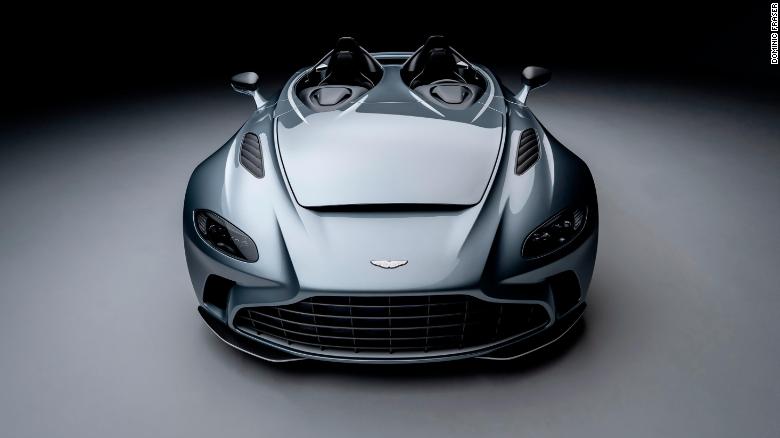
Aston Martin’s entry in this very narrow field, the V12 Speedster, was unveiled Wednesday morning in an online presentation. The Speedster was supposed to have been unveiled at the Geneva Motor Show, but the annual event was canceled this year due to fears about the coronavirus.

Only 88 V12 Speedsters will be produced and they will have a starting price of $950,000 each. The cars are a product of Aston Martin’s “Q by Aston Martin” customization service. The division is named after the character Q in James Bond films who creates clever gadgets and adds features like smoke screens and machine guns to cars — often Aston Martins — for Bond to use.

The Speedster is powered by a 700-horsepower turbocharged V12 engine mounted under the car’s long hood. The car can go from zero to 60 miles an hour in about 3.5 seconds, according to Aston Martin, and it has a top speed of 186 miles an hour.

Aston Martin reveals $950,000 supercar with no roof or windshield ...


The overall shape of the car is reminiscent of vintage racing cars. The driver and passenger sit in seats nested inside separate elongated oval openings in the Speedster’s body. The Speedster was inspired by Aston Martin racing cars of the past, such as the 1959 Aston Martin DBR1 that won the Le Mans 24 hour race. One of the drivers of that car was Carroll Shelby, best known today for his namesake Ford-powered performance cars. When driving that, Shelby did, at least, have a windshield in front of him. The Speedster does not have a windshield.

The Speedster was conceived of only a year ago, according to Aston Martin, and it was made ready for production in that short time. Ordinarily, cars take far longer to go from the drawing board to the factory floor. In this case, there were clearly far fewer practical considerations to worry about than in even an ordinary sports car.

The Speedster is, as Aston Martin calls it, “a living show car.” 

The car’s body is made almost entirely from carbon fiber. The interior was designed to be as simple as possible. Instead of a glove compartment, there’s a removable leather satchel. There is some room for luggage under the raised areas behind the seats.

Buyers will, of course, be able to customize the V12 Speedster. For the presentation version, Aston-Martin designers pay homage to the F/A-18 Super Hornet fighter plane, including numerous bright red tie straps and “Do Not Step” markings on the central bar between the seats.

Aston Martin is currently accepting orders for the V12 Speedster, with the first cars expected to be delivered early next year. Aston Martin was only recently rescued from dire financial trouble when Canadian Formula 1 team owner Lawrence Stroll purchased a large share of the company for £500 million, or $650 million. It’s not the first time in Aston Martin’s 106-year history that the brand has been pulled back from the brink.

Besides ultra-expensive cars like this and more accessible sports cars like the DB11 and Vantage, Aston Martin’s future hopes also lie with the new DBX SUV, the company’s first SUV. It was unveiled at the Los Angeles Auto Show in November.

Monday, June 1, 2020

'Google's Alphabet drones deliver coronavirus supplies'

Deliveries have more than doubled in Virginia


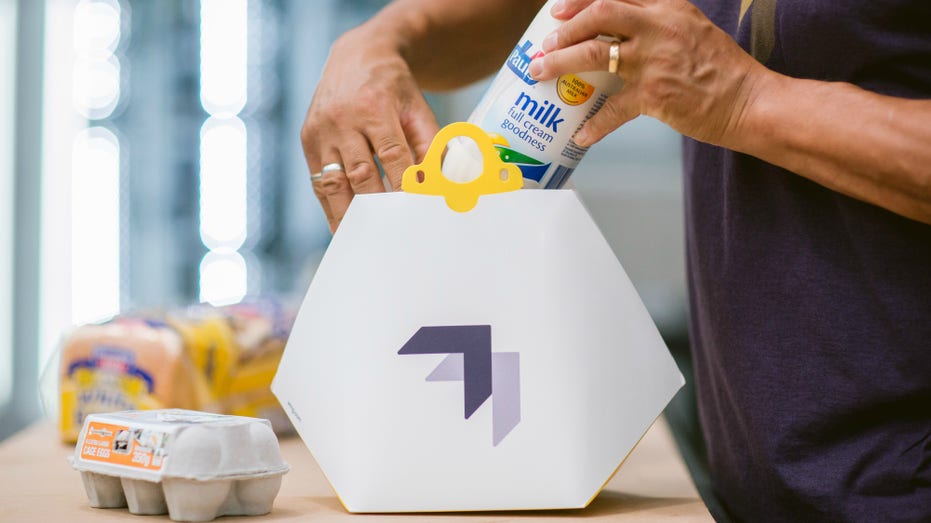
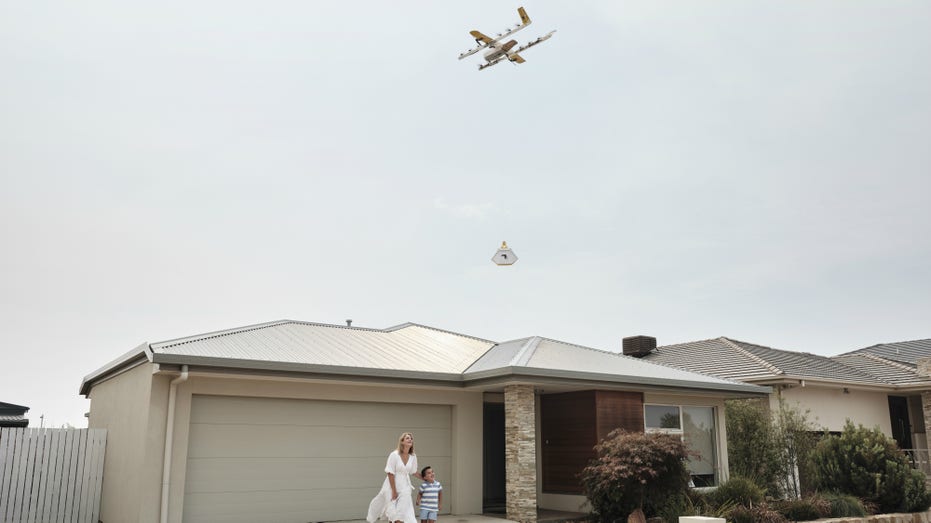
Google parent company Alphebet's drone service, Wing, has seen an uptick in deliveries to customers stuck at home amid the novel coronavirus pandemic.

The drone company, which was created in 2012, is headquartered in Silicon Valley and operates in four locations including Christiansburg, Virginia; Helinksi, Finland; Canberra, Australia; and Logan, Australia.


"The technology is particularly useful at a time when people are homebound in many cases and the need to limit human-to-human contact is important," Wing spokesman Jonathan Bass told Bloomberg.


Deliveries have more than doubled in Virginia, where Wing has partnered with FedEx, Walgreens, a bakery and a coffee shop, Bloomberg.reported.


A Virginia bakery called Mockingbird Cafe said it has been delivering 50 percent more pastries via Wing than on an average weekend, according to the outlet.


"As communities worldwide confront the current COVID-19 pandemic, we understand a delivery option that limits the need for human-to-human contact can be helpful, and we're trying to do what we can to support the communities we serve," Wing said in a Wednesday blog post.


Wing has partnered with Virginia Tech, which has a Federal Aviation Administration-approved drone program, to help carry out its deliveries in Christiansburg.

Wednesday, May 27, 2020

Tab Group Feature in Google Chrome

Google adding tab grouping feature to Chrome

Search engine giant Google is adding a new tab grouping feature to Chrome, the company announced on Wednesday. If you want to try the feature now, Google says it's available in the latest Chrome Beta and will be rolling out more broadly to the desktop versions of Chrome next week, The Verge reported. The user can make a group by right-clicking on one tab and assigning it a custom name and colour. Then, they'll see the colour of the group under all of the tabs included in the group. The netizen can also drag tabs from group to group if they want to change how it is organised.

Before using Chrome‘s new tab grouping feature, you will need to update the browsers. To do that, Go to Help > About Chrome by clicking on the three-dot menu on the top right. Alternatively, you can type “chrome://settings/help” in the address bar. The browser will automatically update and prompt you to restart.

After you’ve updated the browser, here’s how you can use Chrome‘s group tab feature: 

  • Open Google Chrome on your desktop. Right-click on a tab.
  • If you want to create a new group, click on Add to New Group.
  • You’ll see a new colored dot next to the tab.
  • To rename the group, or to change the color, you can tap on that colored dot. Chrome’s grouped tab feature — a new group.
  • If you want to add it to an existing group, go to Add to an Existing Group and select a group. 
  • Chrome’s grouped tab feature — an existing group.
How to Enable and Use Tab Groups in Google Chrome
Note: Even after updating your Chrome browser, if you don’t see tab grouping option, type “chrome://flags/#tab-groups” in the address bar and enable the feature.

Tuesday, May 26, 2020

NETFLIX : Back to normal streaming quality


Netflix starts to bring streaming quality back to normal


American media-services provider Netflix is now going back to normal streaming quality. According to Mashable, in March the streaming platform started reducing streaming quality in some markets, including Europe, India and Australia, with an idea to reduce Netflix's impact on internet speeds. As per FlatpanelsHD (via Android Central), users across Europe are once again getting 4K HDR video quality at up to 15 Mb/s of data transfer. This includes Denmark, Norway and Germany, though the outlet reports that restrictions still apply in some cases. However, over the last week, Denmark and Norway have seen broadband speeds improve, according to Speedtest, while Germany's speeds declined. Netflix confirmed to FlatpanelsHD that it's bringing video quality back up, saying it's "working with ISPs to help increase capacity." Netflix said, "In the last month alone we have added four times the normal capacity. As conditions improve we will lift these limitations." This move by Netflix comes as many European countries slowly ease the restrictions imposed due to the coronavirus pandemic. Germany, for example, allowed shops and schools to reopen last week, while Denmark reopened its retail sector.

Netflix starts to bring streaming quality back to normal

Sunday, May 24, 2020

have you know about 'GOOGLE GLASS'

Google Glass is a wearable, voice- and motion-controlled android device that resembles a pair of eyeglasses and displays information directly in the user's field of vision.
Google Glass offers an reality experience by using visual, audio and location-based inputs to provide relevant information. For example, upon entering an airport, a user could automatically receive flight status information.


When the first version was launched in 2013, consumers immediately voiced their concern of the glasses being an invasion of privacy. Google Glass represented inescapable recording in everyday life. At first, Google attempted to rebrand the glasses as a tool for professionals such as surgeons or factory workers. However, concern remained and Google ceased all work on the Glass project in 2015.
In 2017 work resumed with Glass Enterprise Edition. This relaunch of the project focused all efforts on making a product that would benefit workplaces like factories and warehouses. In 2019, a new version of Google Glass was released -- the Glass Enterprise Edition 2.
How Google Glasses work
The Google Glass operating system  is based on a version of Android. The OS can run application virtualization tools called GLASSWEAR that are optimized for the device. Glassware allows the device to deliver an app to the user, instead of a full desktop. The glasses have built-in Wi-Fi and Bluetooth connectivity and a camera for taking photographs and videos. 
The smart eyewear uses motion and voice recognition to process commands from the wearer. A touchpad is also available on the glasses' rim. To provide the requested information, the device relies on sending small packages of information straight to the wearer through a micro-projector, using a private channel of communication that can only be accessed by the user.
Google Glass then uses a field sequential color (FSC) liquid crystal on silicon (LCOS) system to display images on the lens, allowing wearers to view the image in true colour. FSC refers to a color television system that transmits the primary color information in continuous images and then relies on the human's vision and perception to collect the information into a color picture. LCOS is a form of video display technology.
Features of Google Glass


The key feature of Google Glass is the tiny semi-transparent screen located on the upper right hand side of the glasses. This display occupies only about 5 percent of the wearer's natural field of vision and is responsible for transmitting information to the user.
In order to view the screen, wearers must look up, placing the screen out of the direct line of vision. This feature is particularly important because bad placement of the display could lead to serious safety issues.
Other features of Google Glass include:
  • The ability to take photos and videos and then share exactly what the user is seeing through Google hangouts.
  • The option to use the Google search engine through the glasses, using Wi-Fi or a smartphone's data connection.
  • The ability to have translations streamed straight to the wearer through the screen.
  • Reminders to complete certain chores or tasks with an added visual aspect that will prompt a notification to appear on the user's screen every time they look at a particular object.
  • The ability to sync the glasses to calendars stored on phones or computers in order to receive reminders of events and meetings.
  • Support of both voice and video calls. In the video calls, wearers can show the other person exactly what they're looking at instead of talking face-to-face.
  • The ability to answer emails and text messages using voice dictation.
  • Collaboration with Google Maps to provide step-by-step directions with a map displayed on the screen.
  • The ability to respond to facial and head movements, such as allowing the user to tilt their head to scroll through a page or operate the device with eye movements.
Though this was cool !!! It became a failure model.Due to cost and less clarity of details

Saturday, May 23, 2020

He is just 13 to be a successful entrepreneur


Meet the 13-year-old boy who made the 'Ola and Uber' of Dabbawalas


  • Hot and appening


Thirteen-year-old Tilak Mehta, who developed the app called Papers-N-Parcels, imagined it to be the ‘Ola and Uber’ of courier services

The idea started when he wanted a few books from another end of the city urgently. His father came home tired after a day's work, and so he could not ask him and there was nowhere to go.

This is where the idea of having a startup dedicated to carrying papers and small parcels within the Mumbai for assured intra-day delivery struck Tilak.


World's 1st tech-enabled courier by 13-year-old Tilak Mehta ...

  • Budding with Dabbawalas 


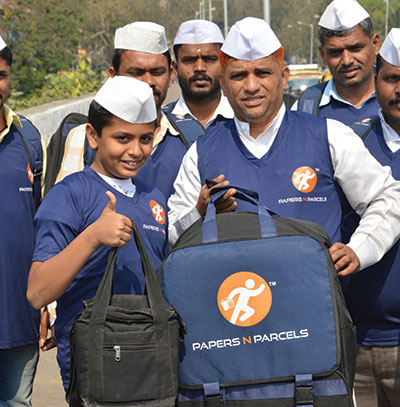
Tilak is a budding entrepreneur who has founded a logistics startup, sold the idea to a banker and convinced him to quit the job and join him as the chief executive, and, also roped in the famed Dabbawalas of the city to help him with the last mile distribution.


  • From entrepreneur to techpreneur 


Tilak Mehta is one of the India’s youngest entrepreneur. His start-up company Papers-N-Parcels or PNP in short, is set to bring about a digital disruption in the space of door-to-door courier pick-up and delivery services.

He is studying in Class VIII,is like any other teenager, who rues about his father coming home from work late and tired.


13-year-old boy ropes in Mumbai's Dabbawalas for a logistics start ...

  • A dream called 'Papers N Parcels' 


"Papers N Parcels (PNP) is my dream and I will work to ensure that the business becomes big," the young entrepreneur beamed.

PNP uses a dedicated mobile application for business and already employs 200 on its own and 300 Dabbawala partners, through whom it is handling up to 1,200 deliveries daily.


  • Ready to blossom


PNP is also open for strategic tie-ups with companies like Swiggy if there is any possible synergy. 


"Its clientele already includes pathology labs, boutique shops and a brokerage which will only grow bigger with the formal launch," said Ghanashyam Parekh, CEO of PNP.


India Maritime Awards Acknowledges Tilak Mehta For Learning Mumbai ...

  • PNP and dabbawalas


"A Dabbawala can earn up to Rs 10,000 a month by becoming a partner," said Dabbawala Association spokesperson Subhash Talekar.

"The Dabbawalas will mostly be handling the last mile delivery for PNP after finishing their day's work," said Talekar.

At present, the company is paying a fixed amount to every Dabbawala partner but will shift to per delivery basis.


Tilak Mehta - EducationWorld

  • The inspirations 

"I enjoyed reading about Steve Jobs. He dropped out of school, but went on to start a company that is so successful. I am also inspired by Mukesh Ambani." Tilak told rediff.com in an interview.

Friday, May 22, 2020

Uber For Kids

Uber developing kids transportation service: Report 


The program is being developed by business strategy chief Zhenya Lindgardt, according to the Information.


Kids could soon be "Ubering."

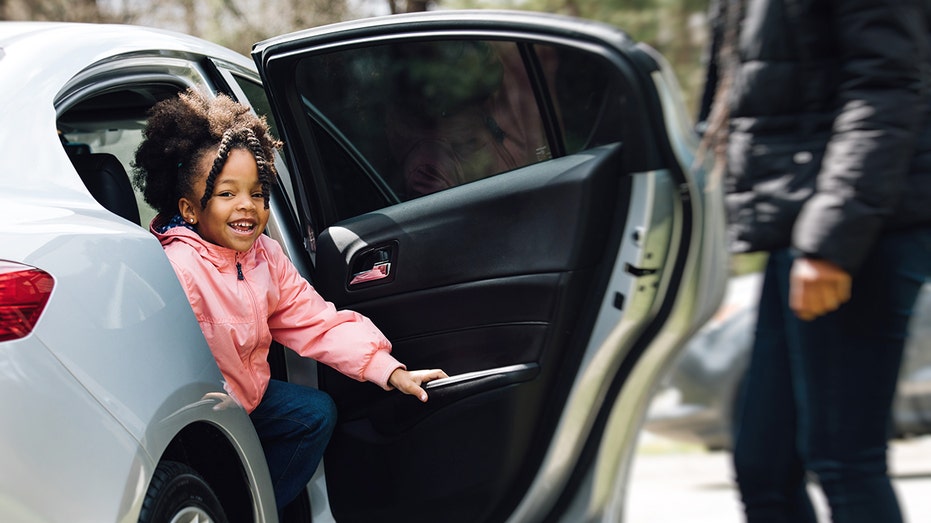
The ride-hailing app has been reportedly developing an “Uber for kids” service for picking up and dropping off unaccompanied children, according to The Information citing an unnamed source with knowledge of the proposal. 

The project is being developed by Zhenya Lindgardt, Uber's customer engangement and business strategy chief, who has a team of 60 people working to develop new businesses using Uber's platform, according to the Information.

Currently, Uber requires passengers to be 18 years or older to get in one of its vehicles. Any passengers under 18 must be accompanied by an adult, and Uber drivers are supposed to check IDs to ensure that passengers are of age to get in the car alone. It's unclear how much the service will cost or when it will roll out with the app.

Uber declined to comment. 


UBER CHALLENGER ZUM OFFERS RIDE-HAILING FOR KIDS WITH ‘NANNIES ON WHEELS’ 


A number of startups have attempted to start similar driving services for kids to combat the dilemma working parents face of picking up kids from school in the middle of the workday. Working mom-led startups such as HopSkipDrive, Zum and Kango have driven more than 1.4 million kids in 16,000 schools largely in California and throughout Colorado, Texas and Washington, D.C., the Associated Press reported. 

Some working parents use their own accounts to order cars for their kids when they aren’t able to pick them up from school or arrange a carpool. But many have grown increasingly concerned about letting kids get in the car with a stranger after ride-sharing companies like Uber and Lyft have been embattled by lawsuits that accuse drivers of assaulting passengers. 

LYFT UPDATES POLICIES FOLLOWING SEXUAL ASSAULT LAWSUITS: HOW PARENTS KEEP KIDS SAFE


On the app Kango, parents have the option to meet a driver before a ride and can request a driver they meet to be their child’s regular driver.

Uber and Lyft have added safety features in recent months. Lyft added a 911 feature in September that alerts authorities when passengers feel in danger or unsafe. And Uber has an in-app emergency button and, in some cities, when a passenger uses it to call 911, it makes certain details from the trip available to dispatchers sending the car’s license plate, make and model.

FB For Kids


Facebook messenger for kids to launch in 70 countries 

Coronavirus school shutdowns prompt Facebook to launch new tools for Messenger Kids app

Facebook is launching new tools on its Messenger app that would be geared toward kids stuck at home because of coronavirus pandemic lockdowns.

Because schools remain closed, the social media app announced the launch of Messenger Kids, an app with parental controls that lets children between the ages of 6 through 12 send text messages and have video chats. The feature is available in more than 70 countries. Facebook is launching its Messenger Kids app with parental controls as schools remain closed globally. 

The parental controls will allow moms and dads to monitor their child’s social media activity while they connect with friends, family members, teachers and coaches online. 

FACEBOOK IS REMOVING EVENTS THAT DEFY CORONAVIRUS SOCIAL DISTANCING GUIDELINES 

Parents can choose to let their kids control their own friend requests through its "Supervised Friending" tool instead of having to manage each request on their child’s behalf. Moms and Dad will still, however, get notifications about the Messenger friends their kids are approving and can override them through the app's Parent Dashboard.

The app's "Groups" feature is also changing. Parents will be able to approve an adult -- such as another parent, family member, teacher or coach -- to monitor their kid's group chat.

Facebook’s kids' messaging service has received backlash in the past for its online safety practices. Last year, a glitch enabled kids to make group chats with others that were not approved by their parents. The error garnered the attention of Congress last year with senators urging Facebook to practice better privacy and security.

Thursday, May 21, 2020

IOS 13.5:Unlock with Mask


Apple IOS 13.5 Brings Faster iPhone Unlock if You Are Wearing a Mask & Gets New Contact Tracing API 

IOS 13.5 update for iPhones is here for users across the world, bringing a much needed update that makes it easier for iPhone users to unlock their devices while wearing masks. The update takes into account the prevailing healthcare regulations across the world, which suggests individuals to wear masks at all times in public. Alongside the update to Face ID to accommodate masks on faces, Apple’s iOS 13.5 update also brings the Exposure Notification API, which Apple built in collaboration with Google to enable seamless integration of Covid-19 contact tracing apps by national or regional healthcare departments.


As seen in the iOS 13.5 release note that is rolling out right now, users of iPhones that employ Face ID instead of Touch ID, i.e. iPhone X, iPhone XR, iPhone XS, iPhone XS Max, iPhone 11, iPhone 11 Pro and iPhone 11 Pro Max, will automatically see the numeric passcode field presented to them as soon as they turn on the iPhone display and attempt to unlock the device, when wearing a mask. This small but crucial enhancement can significantly help ease the ordeal for users, who are now stuck at either needing to remove their masks in order to unlock their iPhones, or wait for repeated failed face recognition attempts to register, before the passcode field turns up automatically. The update can be significantly helpful to healthcare professionals, for whom repeatedly removing their face masks or waiting too long to be able to unlock their devices can be a major deterrent.

Furthermore, the iOS 13.5 update also brings to devices the Exposure Notification API, developed jointly with Google in order to enable cross-platform Covid-19 contact tracing. While the update is being rolled out worldwide and has come to India as well, what remains to be seen here is how this update reflects in Aarogya Setu, India’s official Covid-19 contact tracing smartphone application. While the API will be introduced in all iPhones, contact tracing app developers will be required to enable the use of the API by the respective apps, in order for them to come into effect. Apple and Google’s contact tracing API has paid heed to privacy debates around contact tracing, and it now remains to be seen as to how this update reflects upon all the existing contact tracing apps across the world.

Other areas that the iOS 13.5 update is improving include minor fixes to FaceTime group video calls where the current speaker's video tile will now be responsively highlighted, a black screen issue in some video streaming apps (names of apps unspecified) and a bug in the slide-out menu that appears when you try to share a file from your iPhone. The iOS 13.5 update had hit the 'golden master' (pre-release testing) stage only two days ago, and measures 420MB in size for users who keep their devices regularly updated. The update is now available to all iOS users in India.

Best and Cheap Restaurant In Coimbatore