Followers

Search This Blog

Showing posts with label country. Show all posts

Monday, June 15, 2020

Personal mobility machine needs no help at Tokyo airport


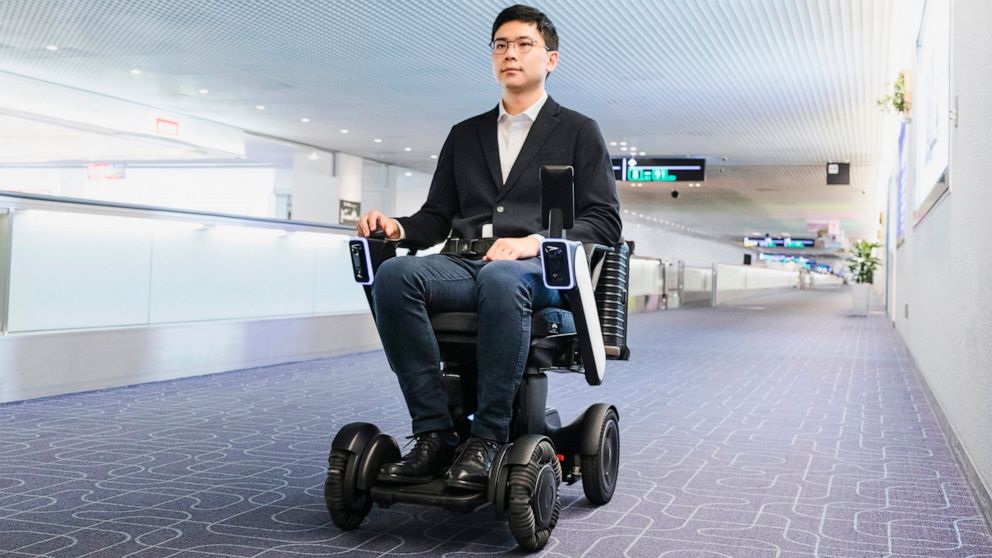
An autonomous mobility system that works like a wheelchair without anyone pushing it is scuttling around a Tokyo airport to help with social distancing amid the coronavirus pandemic


The personal mobility machine seats one person and runs on its own without crashing, even when people jump out unexpectedly, for about 600 meters (660 yards) on a pre-programmed route at Haneda International Airport, WHILL, the company behind the technology, said Monday.


WHILL Chief Executive Satoshi Sugie said robotics and autonomous driving technology that reduce the need for human labor are a good match for these times of “living with" the coronavirus.

“We are rapidly developing our business in order to help restore a world where people can enjoy moving around with peace of mind,” he told The Associated Press.

The ride lasts just several minutes, traveling from security clearance to the boarding gate at a maximum speed of 3.5 kilometers (2 miles) per hour. But hopes are high that the technology, which uses sensors and cameras, can help in other places, such as hospitals, parks and shopping centers. Labor shortages are a problem in Japan, as well as other nations.

Tests have been carried out at various airports since last year, including John F. Kennedy International Airport in New York, and the company hopes to introduce it at airports around the world.

The person on the machine can start or stop it through a tablet controller. It runs on lithium-ion batteries and returns automatically to where it started.

Anyone needing help walking long distances can use it at Terminal One at Haneda, for what’s referred to as that “last-mile mobility,” according to WHILL, based in Yokohama, Japan.

Although vacuum cleaners, machines carrying things and talking robots are already moving about at airports and other places, personal mobility that runs autonomously is still relatively rare in public places.

Saturday, June 13, 2020

Starbucks will now let baristas wear 'Black Lives Matter' apparel after backlash

The coffee giant sparked a backlash after denying staffers who wanted to display their support for the movement.


Messages of solidarity with the Black Lives Matter movement posted at a Starbucks in Naperville, Ill., last week.

Starbucks said on Friday that employees would be allowed to wear Black Lives Matter shirts and pins, a sudden reversal of a company policy that had banned the phrase because it could “amplify divisiveness.”

Amid social media backlash to a policy, the coffee chain also declared that it would provide 250,000 Starbucks-branded Black Lives Matter shirts for baristas and other employees who want them. 

“Starbucks stands in solidarity with our Black partners, community and customers, and understands the desire to express themselves,” Starbucks said in a statement. “We continue to listen to our partners (employees) about how they want to take a stand for justice, while proudly wearing the green apron and standing united together.”

Wednesday, June 10, 2020

World’s largest digital arts centre opens in Bordeaux submarine base

Once a submarine base'A colossal concrete bunker'for Nazi U-boats in the World War II has been hired for digital arts centre. And this will become 'The World's Largest Digital Arts Center'.


Bordeaux’s WWII submarine base will become the world’s biggest digital art centre


Visitors will be able to view giant digital renderings of works by famous artists set to music and projected on to the walls of the structure. 

And despite the challenges of converting the base, abandoned for nearly 50 years, into a gallery, organisers say it is the perfect space for digital art. 

“The space is magical. It mixes concrete, grandeur, water and reflections,” Augustin de Cointet de Filain, director of the Bassins de Lumières, told AFP. 

“When we visited the space, we knew we had to work with it. We had this epiphany and knew we had to put on exhibitions here.” 

The monumental structure includes four 110m-long pools crossed by walkways and space for 12,000 m² of projections, using 90 video projectors and 100km of optical fibre.


Bordeaux’s WWII submarine base will become the world’s biggest digital art centre


The base was built by the occupying German military in 1943 to house a flotilla of 43 U-Boats, but fell into disuse after the end of the war. 

“It was inaugurated on May 13 and was used for less than two years,” said historian Mathieu Marsan.  
“The space is made of 600,000 cubic metres of reinforced concrete. Destroying it would not have been economically viable.” 

The centre will open with a display of work by Austrian artist Gustav Klimt and German painter Paul Klee. 

“He (Gustav Klimt) is an artist who is well-suited to the vastness of this space, because his early works were these large murals and here we have walls, we have space,” Cointet de Filain. 

“Klimt represented innovation in art, and we thought it was time to show that this submarine base can be innovative too.”

Tuesday, June 9, 2020

India is trying to build the world's biggest facial recognition system


In July, Bhuwan Ribhu received some very good news. 

The child labor activist, who works for Indian NGO Bachpan Bachao Andolan, had launched a pilot program 15 months prior to match a police database containing photos of all of India's missing children with another one comprising shots of all the minors living in the country's child care institutions.

India Planning To Set up World's Biggest Facial Recognition System ...

He had just found out the results. "We were able to match 10,561 missing children with those living in institutions," he told CNN. "They are currently in the process of being reunited with their families." Most of them were victims of trafficking, forced to work in the fields, in garment factories or in brothels, according to Ribhu.

This momentous undertaking was made possible by facial recognition technology provided by New Delhi's police. "There are over 300,000 missing children in India and over 100,000 living in institutions," he explained. "We couldn't possibly have matched them all manually." 

Locating thousands of missing children is just one of the challenges faced by India's overstretched police force in a nation of 1.37 billion people. 

India has just 144 police officers for every 100,000 citizens, compared to 318 per 100,000 citizens in the European Union. In recent years, authorities have turned to facial recognition technology to make up for the shortfall. 

New Delhi's law enforcement agencies adopted the technology in 2018, and it's also being used to police large events and fight crime in a handful of other states, including Andhra Pradesh and Punjab. 

But India's government now has a much more ambitious plan. It wants to construct one of the world's largest facial recognition systems. The project envisions a future in which police from across the country's 29 states and seven union territories would have access to a single, centralized database.

Monday, June 8, 2020

Manipur Women's market :Asia's largest all women's market

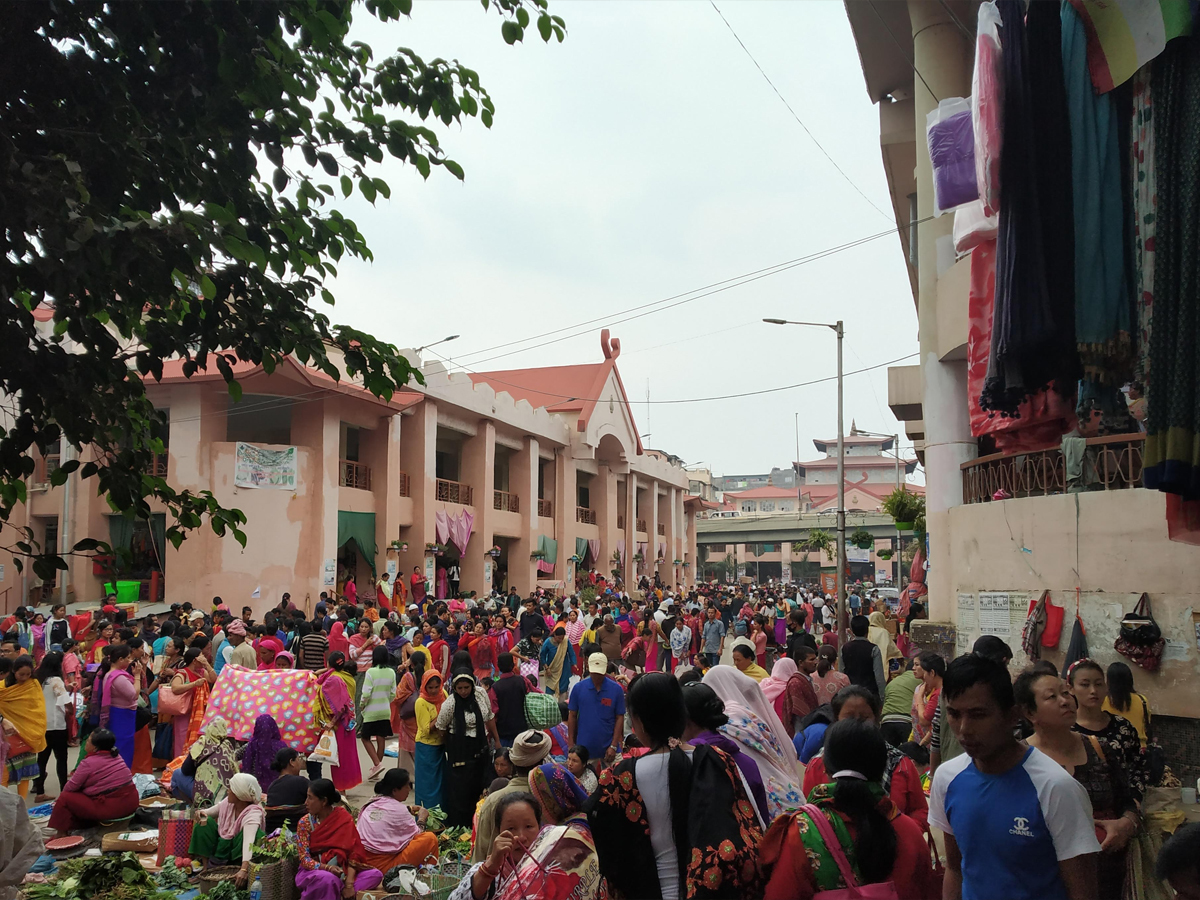
    The Manipur's capital Impal is the city with the market which is run by only women shopkeeper's.This is Asia's largest all women market with more than 4000 shopkeepers.

500-year-old all-women market in the heart of Imphal | Imphal News ...

    Their original language spoken there is Kaithel. Where KAI refers to break THEL refers to display.This market is also popularly known as Emakaithil  meaning Mother's market" .Emakaithil  is 500 years old market,When men of Maiti community stayed away from homes  during waging war for more than a months their family was in need of resources for their living so women's started working to support the family by doing work.This in time helped women's to develop their entrepreneur skills.It paved way for the plenty of female traders around Manipur.
    No men is allowed to run shop around here.These Women's are helping a lot to run their families.Women's here running the shops for around generation and generation.
    Once you enter the market you will see plenty of shops around there. Emakeithil plays a major role in Manipur Women's life and it often called as"Queen of Market".This Market deals only with women's no men's are allowed here.Married Women's starts to run business in the market to support their home and country economy.Women's in this market are working so hard and made the annual turn over around 50 crore.The Market is second family for the Women's around there.
Ima Keithel: Asia's Largest All Women's Market
There are variety of sections like Vegetables,fruits,fishes,clothes,accessories,traditional wears,utensils,knifes,tailoring shops,etc,...This market is learning center for women's.Where local to International news are shared among them.This shows"Educate a Women and their community will prosper".This reveals that women's in India has Strong entrepreneur skills.This Market plays Major contribution for Sate's economy growth.It is operated all 7 days in a week from 3 A.M to 7 P.M.When sunsets women's starts packing and go home to support their families.

Sunday, June 7, 2020

Russia declares state of emergency in Siberia after oil spill

Oil Spill in Russia’s - Clean Up Takes 1.5 Billion Dollars - Recovery May Lead Up to 10 years!!!


Russia has declared a state of emergency in northern Siberia after more than 20,000 tons of diesel fuel spilled into a river near the Arctic Ocean. Following record heat linked to climate change, the permafrost beneath a fuel reservoir reportedly collapsed, leaking diesel across miles of Russian wilderness. Climate activists say the incident is the biggest oil spill in Russia’s modern history.


russia oil spill


How did the fuel spill occur? 

A fuel reservoir reportedly collapsed at the power plant in Norilsk. The leakage caused 20,000 tons of diesel fuel to spill into the nearby Ambarnaya River. According to Norilsk Nickel, the fuel tank that ruptured causing the spill was damaged earlier, when supporting pillars that had "held it in place for nearly 30 years began to sink.

What is the extent of the damage? 

At least 12 km of the Ambarnaya river's surface has been polluted by the spill. According to Environmentalists, the river would be difficult to clean, especially given its shallow waters and remote locations, as well as the magnitude of the spill.

Wednesday, June 3, 2020

Do You Need a Passport to Go to Puerto Rico?


Puerto Rico is a popular destination for travelers from around the world. As a US territory often times people are confused or unsure about what they need in order to travel there. Depending on where you are coming from it can be different.


So Do You Actually Need a Passport to go to Puerto Rico? 


As an American, you do not need one. However, you are required to have other government identifying documents such as a drivers license. You will not require a passport to travel to Puerto Rico.


Which Documents do you need to go to Puerto Rico as an American? 


You may not have any idea of which documents are required when traveling to Puerto Rico, it shouldn’t worry you though, there are many people the same boat. Read on to find out what you’ll need!


Direct Flights Are Typically Better 


You’re also encouraged to take a direct flight to Puerto Rico if you’re traveling without a passport. Otherwise, you will have to show your passport if your airline lands in another country before reaching your destination.

Tuesday, May 26, 2020

India's biggest milk product producer : Hatsun

In summer we often go for icecream parlour.And we as SouthIndian go there and ask Icecream from our home-grown brand which is Arun Ice cream.Though there are many indigenous brands like Amul,Kwality and so on. we often go in search of our home-grown brand which is flagship brand of Hatsun Agro Product Limited(HAP).

R.G. Chandramohan the founder of Hatsun Agro Products popularly known as Arun.He begun his career in 1970 as 21-year-old from Virudhunagar. He then invested by selling his family land and invested it in ice cream business.He started his journey with Rs.13,000 and now the turn over is around 3,600 crores.That was really big investment those days. Initially, there were around 3 employees and it was operated in rented 250 sq.ft.area.At that time Ice candies were prepared and sold that with pushcarts.

That was a risky investment in at that time as the southern market was dominated by brands such as Dasaprakash, Kwality, Rita, and Joy. There were around 3,500-4,000 small-scale ice cream businesses similar to Arun. What made this brand stand out even as others faded away?


Targeting new sections

Chandramohan identified markets that prominent brands had ignored as too small or not worth investing in. He started supplying ice cream to college students (who wouldn’t be averse to trying new brands); and he kept the product quality high and the supply steady.The response was good. Similarly, he identified another market, ship chandlers, studied their packaging and delivery requirements and captured that market as well. Reportedly, by 1974, almost 95 per cent of the college canteen and ship-chandler markets used only Arun Ice Creams.
Another  marketing strategy employed by Chandramohan was introducing the brand in rural areas. Positioning his brand as ‘Fresh ice cream from Madras’, he captured the imagination of the rural public.By then, Arun breached the Chennai became popular only in the late 1980s.
The founder was soon supplying ice creams packed in dry ice containers to educational institutions (canteens and hostels) at the district level. Wherever possible, he used Indian Railways to transport his products. Chandramohan was not yet ready to enter Madras and concentrated on Tier 2 and Tier 3 towns like Pondicherry , Madurai, Sivakasi, Kumbakonam and neary by districts.


Marketing marvel

Around this time, Chandramohan felt the need to supplement his native shrewdness with new skills and studied marketing and personnel management.
Apart from supplying ice cream to social events like marriages, , Chandramohan also announced through hoardings that ice cream could be booked with Arun agents and picked up on specific, fixed dates. The response to this was tremendous.
Arun is supposed to be the first ice cream brand in India to introduce the concept of an exclusive ice cream parlour. It was a Wonderful discovery. Financial constraints made it impossible for Chandramohan to supply deep freezer units to retail shops that were willing to stock his brand. In 1981, one enterprising person who had noticed the public response to the ‘fixed-day’ campaign suggested that he would open an outlet dedicated to the brand and invest in his own freezer unit in return for long-term distribution arrangements. And thus, the concept of a ‘parlour’ where people could come in, sit down, and just eat ice creams was born.
This franchise model soon expanded, first within Tamil Nadu and then to other southern states. Loyalty among the franchisees was so high that some are said to have named their children ‘Arun’. In 1985, Arun topped the ‘Ice cream sales by volume’ list in Tamil Nadu. By 1999, it is said to have opened about 700 outlets in TN, Karnataka, Kerala and Andhra Pradesh.
By the 1990s, turnover had crossed ₹3 crore. The 1990s also saw Hindustan Unilever taking over several regional ice cream brands; Arun Ice Creams refused to buckle under pressure and held its ground. As the market expanded, in 1995, Chandramohan introduced refrigerated vehicles to transport ice cream to its outlets, both within and outside Tamil Nadu. A new depot came up near Madurai for storage and quick delivery.


Expanding the business

But before this, in 1986, Chandramohan had ventured into the dairy business. For ice cream manufacture, the regular supply of quality milk is an essential prerequisite. By directly procuring milk from dairy farmers, Chandramohan created a home-grown supply segment for his ice cream business. The company was named Hatsun Foods Pvt. Ltd. (It later became Hatsun Milk Food Ltd. and in 1998, Hatsun Agro Product Ltd.) The ownership of the brand name ‘Arun’ was transferred to this company.
In the early 2000s, as Chandramohan’s focus shifted to the dairy business, ice cream sales fell. It was only in 2007 that a revival was seen. That year, Hatsun introduced a new parlour format called ‘Arun Ice Cream Unlimited’ offering scoops of ice cream. These parlours were also used to sell its other products and became premium Ibaco parlours when the high-end brand was introduced in 2012.
Hatsun stores now play a dual role: they are distribution points early in the morning and retail stores for the rest of the day, showcasing all the products from Arun in clear-top refrigerators. Franchisees have reported a 50 per cent jump in sales of Arun Ice Creams due to this change.
Today, Hatsun is the largest private sector dairy company in India, with a network of about 10,500 Hatsun ‘Milk Banks’ across 12,000 villages: more than three lakh farmers supply milk to these units. Its 14 plants are spread across four states in South India. It procures about 18-20 lakh litres of milk per day. 
Of this, 60,000 litres go for ice cream production and the remaining for milk, milk products, ghee, curd, and other such products.
Ice cream sales reportedly account for only about 10 per cent of the ₹4,200 crore company; but mention the name ‘Arun’ to anyone and the association with ice creams is immediate — such is its brand recall!


Keeping up with the times

Chandramohan invested in the best technology to keep his ice cream brand ahead of the rest. Apart from cone and chocolate manufacturing equipment, Arun has a well-equipped packaging and production line, and a cold storage facility that can hold up to 10 days’ ice cream inventory. Expert ice cream technologists and management personnel were appointed to keep the quality consistent and innovation levels high.
Arun Ice Creams became famous for the variety of flavours it offers, which included flavours based on traditional Indian sweets, and the new flavours introduced every season. Its ‘Cassatta slice’ ice cream is still a firm favourite among regulars. Bars, cups, ‘ibars’, ‘ibar minis’, icons, specialities, tubs, kids’ bar like Yummy Bear, Spiral, Trio, Jolly Train. Because of control over milk procurement, Arun has been able to consistently maintain its ‘creamier’ USP in ice creams, with 12 per cent fat content (minimum fat content in ice creams is 10 per cent).
With over over 2,300 parlours across Tamil Nadu, Karnataka and Andhra Pradesh, Arun recently entered Maharashtra and Orissa. It is also present in foreign markets such as Seychelles (where it holds 70 per cent of the market ) and Brunei (where it is among the top 5 brands). Clearly, the sun, as in its brand name, keeps shining on Arun.

Saturday, May 23, 2020

He is just 13 to be a successful entrepreneur


Meet the 13-year-old boy who made the 'Ola and Uber' of Dabbawalas


  • Hot and appening


Thirteen-year-old Tilak Mehta, who developed the app called Papers-N-Parcels, imagined it to be the ‘Ola and Uber’ of courier services

The idea started when he wanted a few books from another end of the city urgently. His father came home tired after a day's work, and so he could not ask him and there was nowhere to go.

This is where the idea of having a startup dedicated to carrying papers and small parcels within the Mumbai for assured intra-day delivery struck Tilak.


World's 1st tech-enabled courier by 13-year-old Tilak Mehta ...

  • Budding with Dabbawalas 


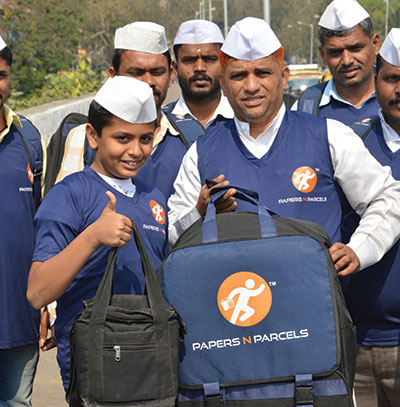
Tilak is a budding entrepreneur who has founded a logistics startup, sold the idea to a banker and convinced him to quit the job and join him as the chief executive, and, also roped in the famed Dabbawalas of the city to help him with the last mile distribution.


  • From entrepreneur to techpreneur 


Tilak Mehta is one of the India’s youngest entrepreneur. His start-up company Papers-N-Parcels or PNP in short, is set to bring about a digital disruption in the space of door-to-door courier pick-up and delivery services.

He is studying in Class VIII,is like any other teenager, who rues about his father coming home from work late and tired.


13-year-old boy ropes in Mumbai's Dabbawalas for a logistics start ...

  • A dream called 'Papers N Parcels' 


"Papers N Parcels (PNP) is my dream and I will work to ensure that the business becomes big," the young entrepreneur beamed.

PNP uses a dedicated mobile application for business and already employs 200 on its own and 300 Dabbawala partners, through whom it is handling up to 1,200 deliveries daily.


  • Ready to blossom


PNP is also open for strategic tie-ups with companies like Swiggy if there is any possible synergy. 


"Its clientele already includes pathology labs, boutique shops and a brokerage which will only grow bigger with the formal launch," said Ghanashyam Parekh, CEO of PNP.


India Maritime Awards Acknowledges Tilak Mehta For Learning Mumbai ...

  • PNP and dabbawalas


"A Dabbawala can earn up to Rs 10,000 a month by becoming a partner," said Dabbawala Association spokesperson Subhash Talekar.

"The Dabbawalas will mostly be handling the last mile delivery for PNP after finishing their day's work," said Talekar.

At present, the company is paying a fixed amount to every Dabbawala partner but will shift to per delivery basis.


Tilak Mehta - EducationWorld

  • The inspirations 

"I enjoyed reading about Steve Jobs. He dropped out of school, but went on to start a company that is so successful. I am also inspired by Mukesh Ambani." Tilak told rediff.com in an interview.

Wednesday, May 20, 2020

Counting Macedonians


No one knows how many people live in North Macedonia 

One reason no one knows how many people live in North Macedonia is that no one knows how many people have left the country, especially since the last census in 2002.

The problem with trying to come up with a figure for Macedonians abroad is that it depends on how you define who should count as a Macedonian. And even if you define it just as those who have Macedonian citizenship, you rapidly discover that the data available is patchy and unreliable. 

Unverified numbers are bandied about in political debate as if they were somehow accurate and verified. There is little understanding that numbers quoted by otherwise reputable organisations like the World Bank or the United Nations give ballpark figures but are otherwise extremely rough and ready.

The reason for this is that such organisations do not collect their own data but have to rely on figures from others.

The first thing to understand is whom exactly we are talking about or counting when it comes to numbers. Are we talking about ethnic Macedonians, citizens of Macedonia or the descendants of people who left Macedonia in the past?

If it is the latter, then it is important to remember that many of their ancestors emigrated from a region that is far bigger than today’s North Macedonia.

Macedonians have been emigrating in large numbers since the late 19th Century, which means that, by any definition, there are going to be a large number of people abroad of Macedonian descent or people whose roots are in Macedonia.

The United Macedonian Diaspora (UMD), which is based in Washington, D.C., represents ethnic Macedonians. Thus Albanians, Turks, Roma and other minorities from what is now North Macedonia are not included in their guesstimates of the numbers of Macedonians abroad.

The UMD claim there are up to 250,000 people of Macedonian heritage in Canada, up to 300,000 in Australia, up to 600,000 across Europe excluding North Macedonia itself and 500,000 in the United States. That comes to a total of 1.65 million.

However, a significant but unknown proportion of those people descend from emigrants who left Ottoman Macedonia, which included Thessaloniki, now Greece’s second city.

The Balkan wars of 1912-13 saw this territory divided into three. While a small part was incorporated into Bulgaria, the bulk was divided between Greece and Serbia.

At the end of World War II, the latter became one of Yugoslavia’s six republics, which in turn became today’s North Macedonia.


The end of World War II in Greece also gave way to a civil war that saw the flight of tens of thousands of ethnic Macedonians, often called Aegean Macedonians.

As with Greek Macedonian refugees, many were evacuated to the Soviet Union (Tashkent in Uzbekistan in particular) and other Eastern Bloc countries. Others fled to Australia, the United States and Canada.

Thousands, however, came to Yugoslav Macedonia directly but many who did not trickled in from the Soviet Union and elsewhere in the two decades after the war.

By the mid-1960s, some 50,000 Aegean Macedonians are estimated to have made their home here. However, some were also settled in Vojvodina in northern Serbia.

Until the mid-1960s, emigration from Yugoslavia was either illegal or at least extremely hard. For Macedonia, there was a major exception though. An agreement between Turkey and Yugoslavia allowed Turks from Macedonia to emigrate freely.

According to the Turkish Ministry of Foreign Affairs, 170,000 Turks did so between 1953 and 1968. However, while the majority were ethnic Turks, many others such as Albanians and Macedonian Muslims declared themselves to be Turks in order to leave.

The difference between these people and the ethnic Macedonians who emigrated is that while in the diaspora the latter often fiercely guard their Macedonian identity, those who went to Turkey soon identified completely as Turks.

From the mid-1960s, Macedonians, like other Yugoslavs, began moving to Germany and other European countries for work, and a new chapter in the history of Macedonian emigration began. 

Today, quite apart from the estimates of diaspora organisations, there are several figures in circulation for the number of Macedonians abroad.

In March 2019, the government published its National Strategy for Cooperation with the Diaspora, which states that 700,000 “can be accepted as a rough volume of emigration”. But it cautions that this number can only be estimated “through foreign sources of data”.

A UN figure for 2019, also based on foreign data, gives a precise figure of 658,264 while one for the World Bank gives a rounded 500,000.

Edmond Ademi, the Minister for the Diaspora, said he believed the correct figure is 500,000 to 600,000, while Izet Zeqiri, an economist who has studied the figures, puts it at 600,000 to 640,000. 

When Macedonians abroad show up in foreign data, it means they are citizens and so ethnicity is not a factor. However, it is clear that in some countries different nationalities tend to group together. 

Albanians are the vast majority of Macedonians in Switzerland, for example. Macedonian Muslims go to Italy and ethnic Macedonians tend to go to Slovenia and Sweden. If those abroad have also acquired the citizenship of another country, then mostly they no longer show up in the figures. 

Australia, by contrast, gives a figure of just over 49,000 for those resident who were born in what is today North Macedonia.

In Europe, according to Eurostat data, which in turn comes from national statistical agencies, on 1 January 2019 there were 102,000 Macedonians in Germany, 66,600 in Switzerland, 63,600 in Italy, 23,400 in Austria and 12,300 in Slovenia.

According to Eurostat, there were 156,900 Macedonian citizens in the EU in 2010 and 220,400 in 2019.

But, as with all such figures, they are also problematic. Firstly, at least 81,000 Macedonians have acquired Bulgarian passports, which means they can work easily in the EU. Thus, any Macedonian registered as a Bulgarian in the EU will not show up in the data as a Macedonian.

Secondly, according to Apostol Simovski, the director of the State Statistical Office, foreign data showing Macedonian citizens abroad does not show where they came from.

For example, the number of Macedonians in Italy is dropping, while their number in Germany is increasing.
How can you create an economic policy without knowing who is here and who is not? 
It would be wrong, therefore, to assume that those arriving in Germany or elsewhere are new emigrants from North Macedonia and hence that its population has dropped by the same number as the new arrivals may have left the country years ago.

Thirdly, Eurostat figures — and hence the national data from which they are compiled — are puzzlingly patchy. Eurostat records the number of Macedonians in Greece, Spain, Britain, Malta and Croatia as zero.

In fact, for example, there are estimated to be 3,000 Macedonians living in Britain, not including those registered as Bulgarians, according to the Office for National Statistics. At the end of 2018, there were 1,591 Macedonian citizens with residence permits for Malta. If you Google “How big is the Irish diaspora”, the top search result yields an article from The Irish Times that says “three to 70 million, depending on who is talking”.

There are 4.83 million people in the Irish Republic. In terms of Macedonians abroad, they seem to be taking on the mantle of the Irish of the Balkans, except that unlike the Irish, they do not even know how many people live at home.
Tuesday, May 19, 2020

Miyawaki Forest-coimbatore

                 As Deforestation are increasing globally .There are lot of effort taken by government and NGO's to preserve nature.One of the method followed in afforestation are creating man made forest which is Miyawaki forests.

        Akira Miyawaki, a Japanese botanist and ecologist, has been planting forests along the coastline of Japan to protect it from Tsunamis and soil erosion. Now his idea has helped in the development of man made forest around the world.
                   Do you people believe that there is Miyawaki forest being created in Coimbatore.Yes,you might wonder by seeing Miyawaki forest flourishing around Singanallur lake.
                                 Read more to known what it really is!!!!
        Miayawaki forest involves planting dozens of native species in the same area, and becomes maintenance-free after the first three years.
                           Miyawaki method of afforestation / planting trees involves the planting a number of different types of trees close together in a small pit. By closely planting many random trees close together in a small area enriches the green cover and reinforces the richness of the land.


            CUBE(Center for Urban Biodiversity Conservation and Education) and Coimbatore City Municipal Corporation has taken up this idea of creating Miyawaki Forest to increase Green coverage around the city.
             In June 2016 the first Miyawaki Forest was created with 150 saplings being planted on 750 sqft. In the next two months 250 saplings were planted on a 1,000 sq-ft. plot and another 166 saplings on 500 sq.ft. These trees have proved that the method of creating dense forests is successful in Coimbatore too.Then,they began work on the further with this Miyawaki Forest plantation on the lake bund. As many as 500 saplings of 50 varieties of trees were planted in 1,500 sq.ft. with three feet space between the saplings. This plot also has a 200 sqft open area in the middle.In a few months when these saplings grow we can bring people to this open space to give them an experience of being inside a forest.
          Since Singanallur lake is down stream lake they are trying to turn this as natural spot.They also planned to make a community information center to inform students and public about the biodiversity and water conservation.


Monday, May 18, 2020

US:Unmanned Drone


The US Air Force on Sunday successfully launched its high-tech drone X-37B, placing the reusable vehicle into orbit for its sixth secretive mission in space.

The drone, which resembles a smaller version of the manned space shuttles retired by the US space program in 2011, was launched from Cape Canaveral in Florida, the Air Force said.

It will spend months in orbit, remotely conducting a series of experiments.

"Congratulations on the 6th mission of the X-37B reusable spacecraft," Defense Secretary Mark Esper tweeted shortly after the launch.

The huge Atlas V launch vehicle took off with an earth-shaking roar at 9:14 am (13H14 GMT) to loft the drone, also known as an Orbital Test Vehicle (OTV), into space.

The drone in turn will deploy a small research satellite dubbed FalconSat-8, to carry out additional experiments, Secretary of the Air Force Barbara Barrett explained earlier this month, elaborating on what up to now has been a highly secretive project.

"This X-37B mission will host more experiments than any prior missions," said Barrett, who also heads the recently created US Space Force.

Among the experiments: testing the effect of radiation on seeds and other materials, and transforming solar power into radio-frequency microwave energy that could be transmitted to the ground.

The X-37B is 29 feet long (nine meters), with a wing span of 15 feet (4.5 meters).

The Pentagon has published photos of the drone, but up to now had revealed few details about its missions and capabilities.

On each of its successive flights -- the first took place in 2010 -- the solar-powered craft has remained in orbit for longer periods. Its last flight ended in October 2019, after 780 days in orbit. That brought the craft's cumulative time in orbit to 2,865 days.

Monday, May 11, 2020

People with no acknowledgement of ATM exists


                                          ERITREA COUNTRY

         Eritrea is a northeast African country.President Isaias Afewerki has governed the East African nation for 22 years, and the country has never held elections since gaining independence from Ethiopia in 1993. It remains as a one-man dictatorship under President Isaias Afewerki. It has no legislature, no independent civil society organizations or media outlets, and no independent judiciary. National election and presidential election have  held in this country since 1993.
ECONOMY:80% of workforce are employed in agriculture.

                                        The government restricts religious freedoms, banning all but four groups.There is no room for freely reported news and the media.The government has held a monopoly over broadcasting since independence. The people who make reviews about government are sentenced severely sometimes it may end up in death.The few privately-owned newspapers were closed in 2001 as part of a crackdown on the opposition.The government operates two channel with one London based satellite station.
                                       One of the most of devastating findings of the Eritrea’s onerous system is compulsory military service to the youths of the country which can be classified as enslavement, another crime against humanity. Most able-bodied men and women in Eritrea are forced to perform national service, which often lasts for the duration of a person’s working life and commonly entails sexual violence, torture, and other harsh conditions.So many people tend to migrate to other countries by walking which led them to dead in the mid of travel.Because they need to cross Sahara dessert and The Mediterranean Sea to reach Europe.

LACK OF FREEDOM AND INDEPENDENCE!!!


  1. SIM cards are considered as a gold particle because it is not easy to buy and use a SIM card over there.Only the 'ERITAL' network provides telecommunication service and it is owned by the government which provides bad service.It cannot be used for internet connection
  2. Only through WIFI the people connects to internet.The separate VPN access is provided by the government for using social media platforms such as facebook, twitter.More than 1 percent area uses internet connection in the country.And till now there exists public telephone exchange for communication.
  3. Even the rule is fixed for taking money from the people's own bank account.However the people can hold money up to 1 crore in their bank account.But they can withdraw only 5000 nakfa (rupees) per day except for marriage function.
  4. ATM service is not available in this country. 
  5. It has only one alcohol manufacturing country which adds on that a person can have only 2 beer per day.
  6. No passport is provided for young people until the military service is done.So there exists illegal migration between neighboring countries such as Ethiopia and Sudan.
  7. Conscription(i.e.if you are able to fight you must fight)it can last until the age of 40.


        Eritera is the 9th largest country to make more refugees in the world.
        Eritrea received a score of just 3 on a 100-point scale in Freedom in the World 2018.

Best and Cheap Restaurant In Coimbatore